SRAM (Static Random Access Memory)

Results:
SRAM (Static Random Access Memory) is a type of volatile memory that retains its contents as long as power is supplied. It is known for its high speed and is commonly used in computer systems for cache memory and as a temporary storage for data that requires rapid access.

Definition:
SRAM is a semiconductor memory that uses flip-flops or latches to store each bit of data. Unlike DRAM (Dynamic Random Access Memory), SRAM does not require periodic refresh cycles, which makes it faster for read and write operations.

Function:
The primary function of SRAM is to provide a fast and temporary storage solution for data that needs to be accessed quickly. It is used in various applications where speed is critical, such as CPU caches, graphics cards, and high-speed buffering systems.

Applications:
1. CPU Cache: SRAM is used in the cache memory of processors to store frequently accessed data, reducing the need to access slower main memory.
2. Graphics Processing: In graphics cards, SRAM is used for storing texture maps and other data that need to be accessed rapidly during rendering.
3. Embedded Systems: SRAM is used in embedded systems for fast data storage and retrieval, such as in microcontrollers and digital signal processors.
4. Networking Equipment: High-speed networking equipment often uses SRAM for buffering data packets.

Selection Criteria:
When choosing SRAM for a specific application, consider the following criteria:
1. Speed: SRAM should have a fast access time to meet the performance requirements of the system.
2. Capacity: The amount of data that needs to be stored will determine the required memory capacity.
3. Power Consumption: SRAM can consume more power than DRAM, so power efficiency may be a consideration, especially in battery-operated devices.
4. Cost: SRAM is generally more expensive per bit than DRAM, so cost is a significant factor in large-scale applications.
5. Reliability: The reliability of the SRAM under the expected operating conditions should be considered, including temperature ranges and expected lifetime.

In summary, SRAM is a fast, volatile memory used for high-speed data storage and retrieval. Its applications range from computer caches to embedded systems, and the selection process involves balancing speed, capacity, power consumption, cost, and reliability.
Please refer to the product rule book for details.
Read More
SRAM (Static Random Access Memory)Results:
Comprehensive
Price Priority
Stock Priority
Image
Part Number
Description
Availability
Unit Price(USD)
Quantity
Operation
GSI Technology
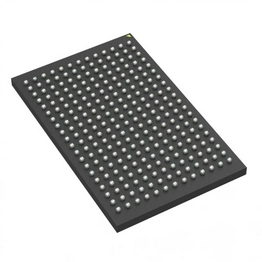
Package:BGA-165
ECAD Model:
36MB 8M x 36 1.3A 1.9V 550MHz Parallel BGA-165 SMD
Available Stock
30
Estimated Ship Time:6-13 working days
1+$667.0188
10+$613.0296
- +
Ext. Price(USD):$667.01
MOQ:1
Mult:1
SPQ:1
GSI Technology
Package:BGA
ECAD Model:
Memory 36MB 8M x 36 1.25V-1.35V 675MHz Parallel BGA SMD
Available Stock
2
Estimated Ship Time:6-13 working days
1+$1,155.5352
- +
Ext. Price(USD):$1,155.53
MOQ:1
Mult:1
SPQ:1
GSI Technology
Package:BGA
ECAD Model:
1.7V, 1.9V, 633MHz, Parallel, BGA, SMD
Available Stock
105
Estimated Ship Time:9-14 working days
1+$490.6656
10+$451.1257
- +
Ext. Price(USD):$490.66
MOQ:1
Mult:1
SPQ:1
GSI Technology
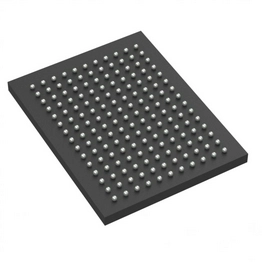
Package:BGA-165
ECAD Model:
36MB 16M x 18 1.7V 1.15A 1.9V 550MHz Parallel BGA-165 SMD
Available Stock
75
Estimated Ship Time:9-14 working days
1+$762.9768
10+$701.0172
- +
Ext. Price(USD):$762.97
MOQ:1
Mult:1
SPQ:1
GSI Technology
Package:BGA
ECAD Model:
144Mbit Static RAM
Available Stock
7
Estimated Ship Time:6-13 working days
1+$309.528
10+$284.85
30+$275.3136
- +
Ext. Price(USD):$309.52
MOQ:1
Mult:1
SPQ:1
Static Random Access Memory 2.5 or 3.3V 128K x 36 4M
Available Stock
54
Estimated Ship Time:6-13 working days
1+$18.5495
10+$16.1784
252+$14.4396
504+$14.0832
- +
Ext. Price(USD):$18.54
MOQ:1
Mult:1
SPQ:1
GSI Technology
Package:BGA
ECAD Model:
Parallel BGA, 1.7V/1.9V, 450MHz, SMD
Available Stock
19
Estimated Ship Time:9-14 working days
1+$372.7836
10+$342.9097
- +
Ext. Price(USD):$372.78
MOQ:1
Mult:1
SPQ:1
25 / PageGoto
